
The Quiet Withdrawal
Specialty insurers – the carriers that step in when standard home insurers won’t – are now pulling back from wildfire-prone regions themselves, leaving homeowners in high-risk zones with fewer options and sharper price increases than at any point in recent memory.

Why the Last Resort Is Running Out
For years, specialty and surplus lines insurers filled a critical gap. When major carriers like State Farm or Allstate stopped writing new policies in California, Nevada, or parts of Colorado, homeowners turned to the surplus lines market – a less-regulated tier of coverage designed for properties that standard insurers consider too risky. These carriers charge more and cover less, but they covered. That arrangement is now breaking down.
The core problem is that wildfire losses have stopped behaving like insurable events in the actuarial sense. Insurers price risk based on frequency and predictability. Wildfires used to be regional, seasonal, and – within certain tolerances – foreseeable. The fires burning across the western United States now happen faster, spread farther, and destroy more expensive property than older risk models anticipated. When the underlying math no longer works, even carriers built for unusual risk start walking away.
Surplus lines insurers also lack the geographic diversification that helps standard carriers absorb localized catastrophes. A national insurer writing policies from Maine to Hawaii can offset California wildfire losses against relatively quiet years elsewhere. A specialty carrier concentrated in the intermountain West or the California foothills has no such cushion. Several carriers in that position have quietly declined renewals or stopped writing new business in specific ZIP codes, a pattern visible in state filings but rarely covered in mainstream financial press.
Reinsurance is the other pressure point. Specialty insurers don’t absorb all that risk themselves – they buy reinsurance to offload their worst-case exposure. Reinsurers, observing years of mounting losses, have raised their premiums sharply and tightened the terms under which they’ll pay out. That cost flows directly to the specialty insurer, who passes it to the homeowner, or simply decides the math no longer justifies the policy. When reinsurers price certain wildfire zones as effectively uninsurable, the specialty carriers writing primary coverage in those areas face an impossible position.

What the Withdrawal Looks Like on the Ground
The mechanics of this exit are rarely dramatic. A carrier doesn’t announce it’s leaving wildfire coverage the way a retailer announces store closures. Instead, renewal notices arrive with premiums that have doubled or tripled. Policy terms quietly narrow – coverage for outbuildings disappears, debris removal limits shrink, extended replacement cost provisions vanish. Then the non-renewal letters start, typically sent 60 to 90 days before expiration, just inside the window required by state law.
Homeowners who owned properties in these zones years ago often bought at prices that didn’t reflect wildfire risk because the insurance market hadn’t priced it yet either. They financed those purchases with mortgages that require continuous insurance coverage. When specialty insurers exit and the state’s insurer of last resort – typically a FAIR Plan or equivalent – becomes the only option, they’re often looking at higher premiums for narrower coverage on a home whose market value is starting to reflect the same risk that just made it uninsurable.
The dynamic is compounding in California, where the state’s FAIR Plan has seen its exposure balloon as private market withdrawals accelerate. The FAIR Plan was designed as a temporary safety net, not a primary insurer for hundreds of thousands of homes. Its financial reserves weren’t built to absorb a catastrophic fire season under that kind of exposure. When a major fire hits a region where the FAIR Plan has become the dominant insurer, the question of whether the plan itself can pay claims becomes uncomfortably real.
This is also a problem that regional insurers are navigating in flood-prone markets too, where the withdrawal pattern follows the same logic: private carriers exit, public plans absorb the residual risk, and the political pressure to keep premiums artificially low means those public plans are perpetually undercapitalized relative to actual exposure.
Mortgage lenders are beginning to price this reality into their underwriting. A property in a high wildfire-risk zone that can only obtain FAIR Plan coverage is a different credit risk than one with competitive private market options. Some lenders are tightening loan-to-value requirements in high-risk zones, and a few institutional buyers of mortgage-backed securities have started asking harder questions about wildfire exposure in the underlying loan pools. The insurance withdrawal isn’t just a homeowner problem – it’s starting to move through the real estate financing system.
Where This Leaves Homeowners
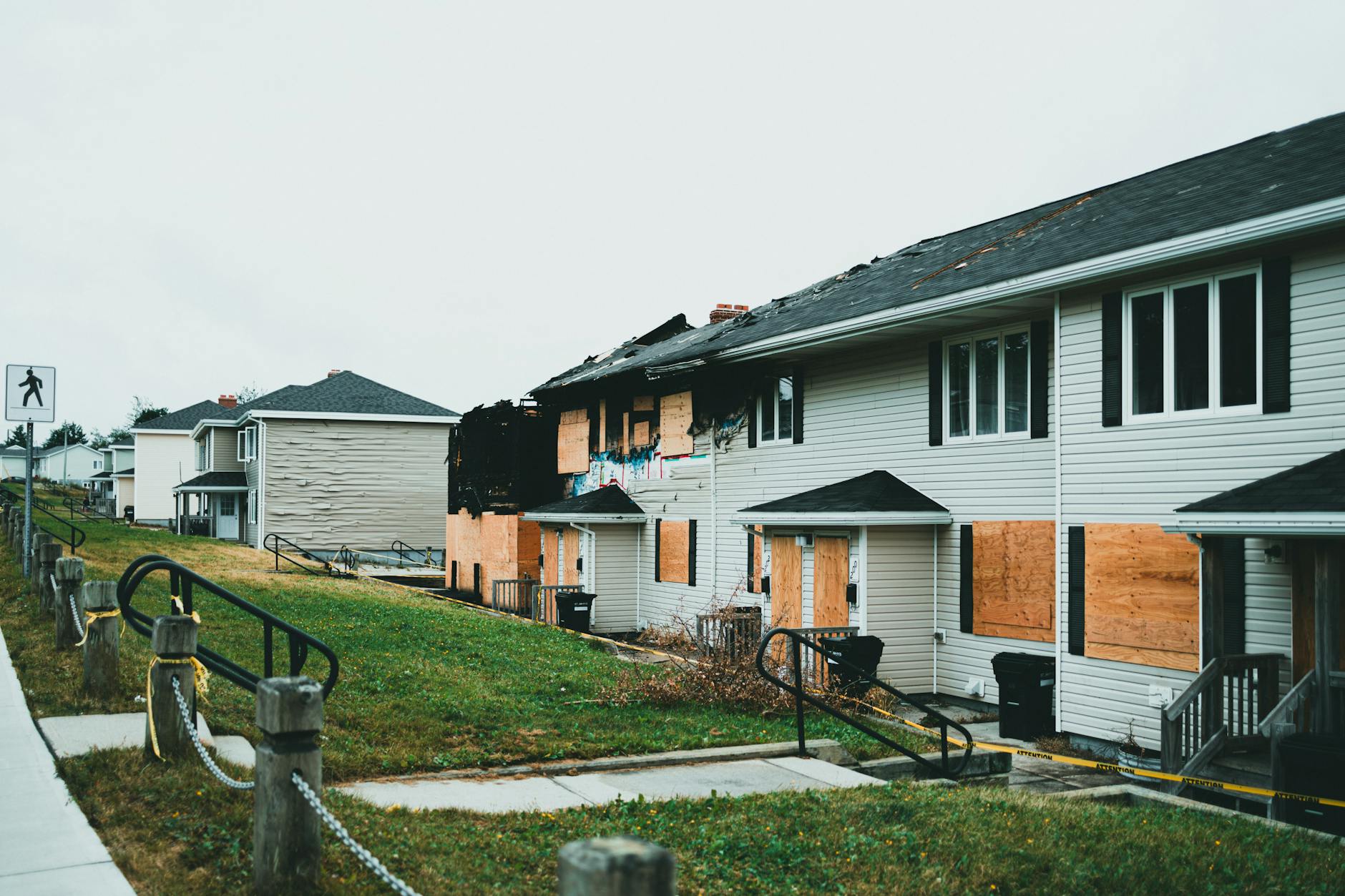
Homeowners in affected areas are effectively trapped between a property they can’t easily sell – because buyers face the same insurance problem – and coverage costs that consume an increasing share of household income. Mitigation efforts like home hardening, defensible space clearing, and fire-resistant roofing can lower risk, and some carriers will offer modest premium reductions for documented improvements. But those reductions rarely offset the broader market repricing, and the upfront cost of hardening an older home can run into tens of thousands of dollars.
The harder question is what happens to property values – and the communities built around them – if insurance becomes either unaffordable or structurally unavailable. Some wildfire-prone towns in California and Oregon are already watching younger residents leave, not because of fire directly, but because the combined cost of insurance, mortgage, and maintenance has made ownership economically irrational. Whether state regulators, federal programs, or the private market find a workable answer before more of these communities hollow out is the question no one in the industry has answered convincingly.