The Quiet Exit Strategy Reshaping a Blue-Collar Industry
For decades, owning a regional plumbing company meant building something personal – a business tied to your name, your trucks, your reputation across a handful of zip codes. The exit plan, if there was one, usually involved handing the keys to a son or daughter, or selling to a longtime employee. Private equity wasn’t part of the vocabulary. That is changing fast, and most customers have no idea it’s happening.
Across the country, a wave of small and mid-sized plumbing contractors – the kind that service residential neighborhoods, handle commercial builds, and staff crews of 10 to 60 technicians – are quietly accepting acquisition offers from private equity-backed consolidators known as rollups. The transactions are rarely announced. There’s no press release, no change to the company name, sometimes not even a new logo. The owner cashes out, often stays on for a transition period, and a national platform takes over the financials.
Why Plumbing Became a Target
Private equity follows predictable logic: find a fragmented industry with stable demand, acquire the best local operators at reasonable multiples, and build scale that justifies a premium exit later. Plumbing checks every box. Demand is non-discretionary – pipes don’t care about economic cycles. The work is geographically bounded, meaning a dominant regional player faces little competition from national brands. And the industry remains deeply fragmented, with the vast majority of operators running family-owned shops that have never been through a formal sale process.
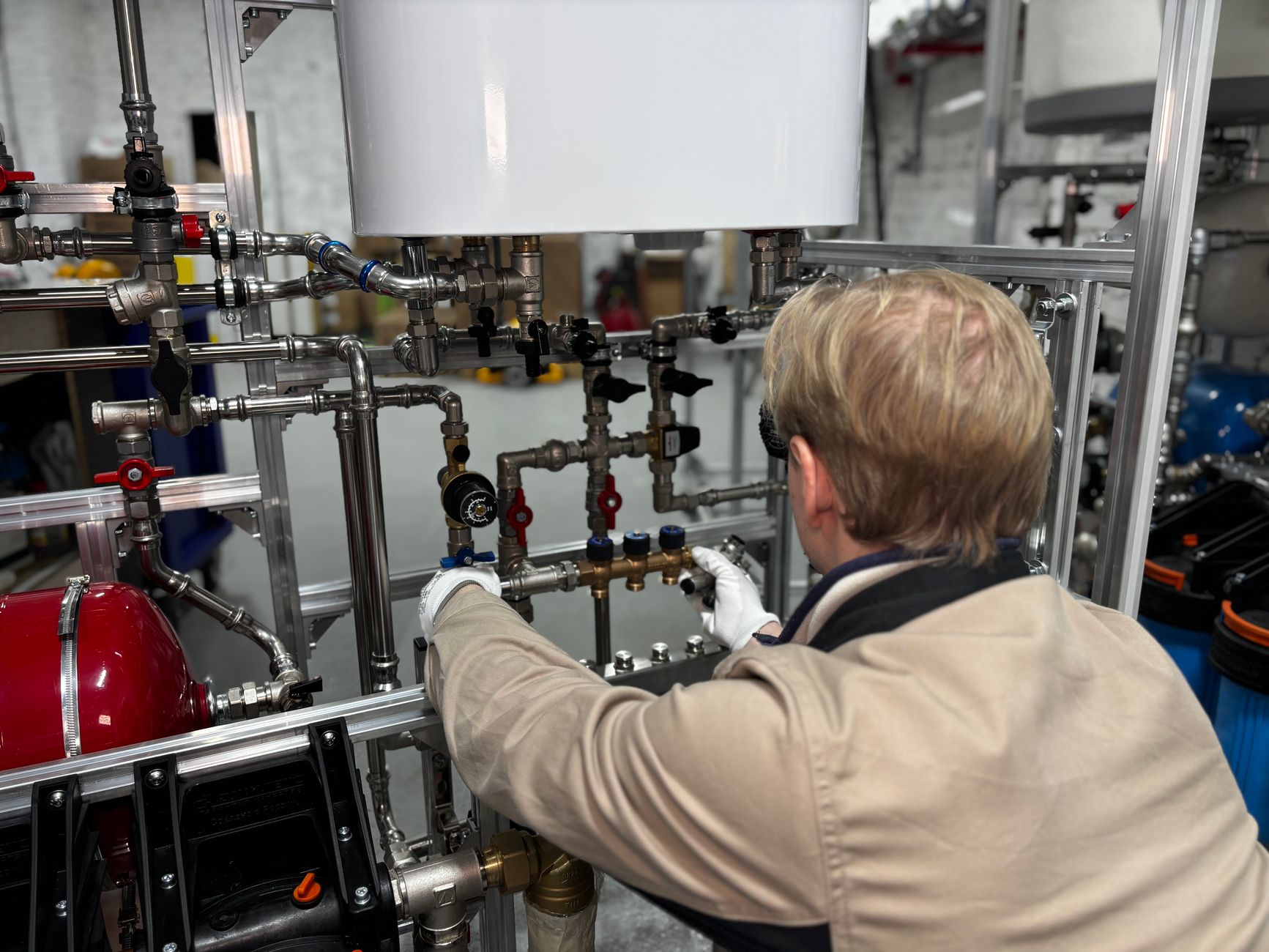
The margins in skilled trades have also quietly improved over the past several years. Licensing requirements, labor shortages, and the rising complexity of modern plumbing systems – tankless water heaters, hydronic systems, water filtration – have all pushed hourly rates up. A well-run plumbing company in a mid-sized metro can generate strong recurring revenue through service agreements and maintenance contracts, which are exactly the kind of predictable cash flows that PE investors price aggressively.
The rollup model itself is not new. It has already reshaped regional veterinary practices, dental groups, and HVAC companies. Plumbing followed HVAC almost on schedule – once PE firms demonstrated that home services consolidation could generate strong returns, capital flowed toward every adjacent trade. Electrical contractors and plumbers were next in line.
What Owners Are Actually Getting
The offers coming to plumbing contractors are often the largest sums these owners have ever seen. A company doing a few million in annual revenue might attract a multiple that was unthinkable through a traditional business broker sale. PE platforms are willing to pay those numbers because they’re not just buying a single company – they’re buying market share, a trained workforce, and a customer list in a geography they want to control. The math changes when you’re building a portfolio.
Owners who sell typically receive a combination of cash at close and rolled equity – meaning they keep a stake in the larger platform, with the promise of a second, larger payout when the PE firm eventually sells or takes the consolidated entity public. That structure is a powerful motivator. It asks sellers to believe the platform will grow, but it also keeps them engaged during the transition rather than immediately disengaged.

The Operational Reality After the Deal Closes
What happens inside these businesses after acquisition is where the story gets more complicated. PE-backed platforms typically impose standardized systems – centralized dispatch, uniform pricing software, shared marketing infrastructure, and consolidated back-office functions. For some acquired companies, that infrastructure is a genuine upgrade. Owners who were running payroll on spreadsheets and scheduling through text messages often find that professional systems actually reduce daily chaos.
But the pressure to hit growth targets is real and constant. PE firms operate on defined holding periods, usually three to seven years, and they need to show consistent revenue growth to maximize their exit multiple. That pressure flows downstream. Technicians who worked for a family operation with flexible policies may find themselves measured on upsell rates and ticket averages in ways they weren’t before. Service calls that once ended with a straightforward repair might now involve a structured pitch for a service agreement or a water heater upgrade.
Labor is the biggest variable in any plumbing company, and it’s where consolidation can create friction. The skilled technicians who made a regional shop worth acquiring are also the employees with the most options. If the culture of a small, well-run shop shifts after acquisition – more metrics, less autonomy, different management – turnover follows. Several PE-backed home services platforms have discovered that buying a great local reputation doesn’t automatically mean retaining the people who built it.
Customer pricing is another pressure point that’s beginning to surface. When a single platform owns multiple plumbing companies across a metro area, the competitive dynamic that historically kept prices in check starts to erode. This is not speculation – it’s the same pattern that played out in urgent care, in eye care, and in other service categories where rollup consolidation reached meaningful market concentration. Whether regulators eventually take notice of trades consolidation the way they’ve begun scrutinizing healthcare rollups is an open question, but the structure is identical.
For plumbing contractors still on the fence, the window for strong sale multiples may not stay open indefinitely. PE activity in any sector tends to compress multiples as platforms compete for the best remaining targets and the early arbitrage disappears. The owners getting the most attractive offers right now are the ones with clean financials, strong service agreement books, and a workforce that isn’t entirely dependent on the founder showing up every day. That last requirement – building a business that runs without you – turns out to be the same thing that makes a company worth keeping.
Frequently Asked Questions
Why are private equity firms buying plumbing companies?
Plumbing offers stable, non-discretionary demand, fragmented ownership, and improving margins – exactly the conditions PE rollup strategies target for consolidation and resale at a premium.
What do plumbing business owners receive when they sell to a PE rollup?
Most deals combine upfront cash with rolled equity, giving the seller a stake in the larger platform and a potential second payout when the PE firm eventually exits.