The Quiet Consolidation Reshaping Cancer Care
Private equity has spent years rolling up dental offices, dermatology clinics, and urgent care chains. Now the same playbook is moving into oncology – and it is doing so with far less public attention than the stakes deserve. Regional cancer centers, many of them built over decades by physician-founders who wanted independence from hospital systems, are signing acquisition deals with PE-backed platforms at a pace that is beginning to reshape how and where Americans receive cancer treatment.
The structure of these deals follows a familiar pattern. A private equity firm acquires an anchor oncology practice, usually a mid-sized group with strong referral networks and multiple locations, then uses that platform to absorb smaller practices nearby. The regional brand often stays intact. The staff stays. The doctors sometimes stay, at least for the first few years of their earn-out period. What changes is who controls the revenue, the staffing ratios, the drug purchasing contracts, and ultimately the clinical protocols.
Oncology is not dermatology.
Why Oncology Became a Target
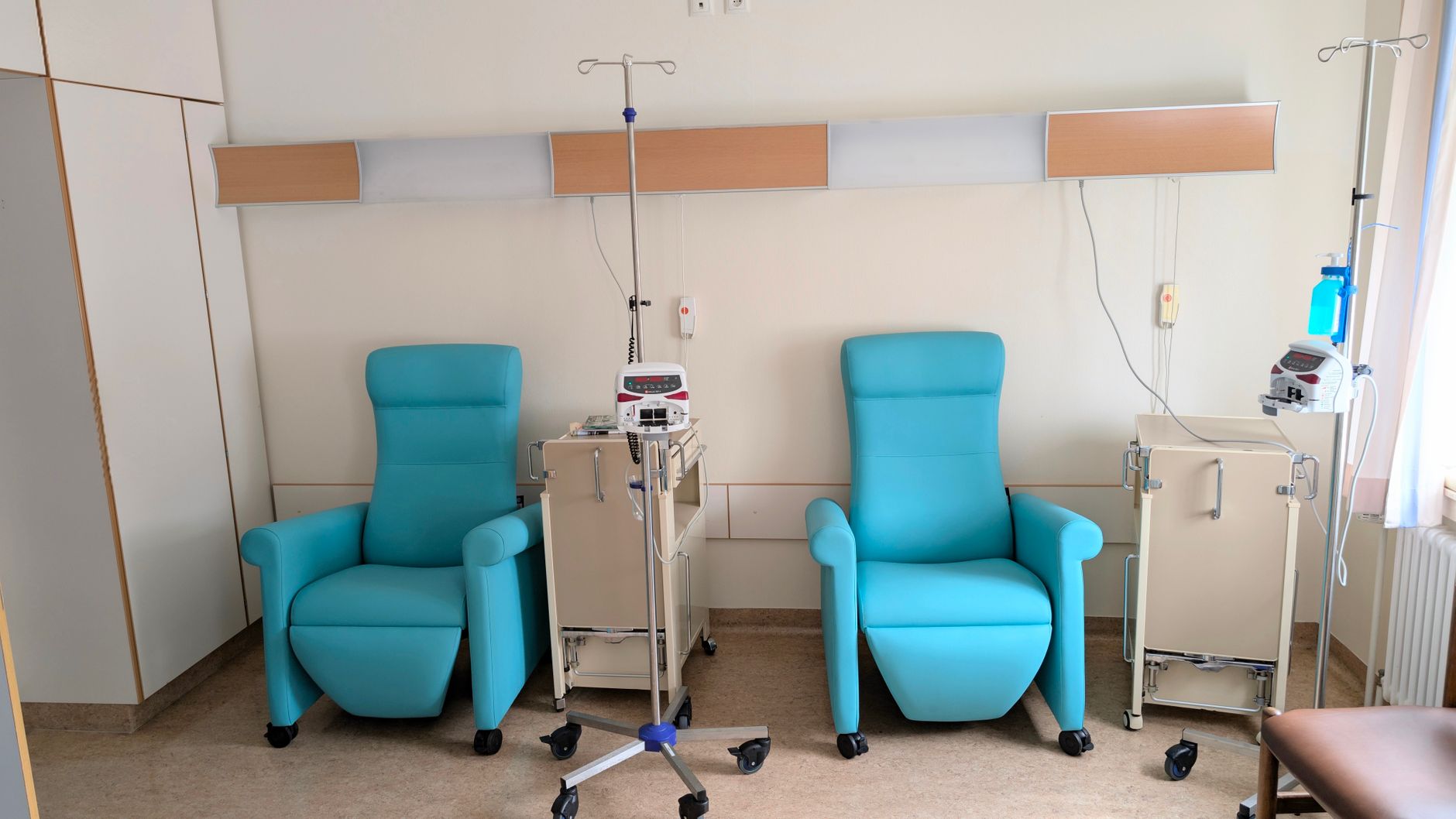
The financial logic behind oncology consolidation is straightforward, even if the ethical implications are not. Oncology practices operate some of the most profitable in-office drug dispensing in all of medicine. When a practice administers chemotherapy directly – rather than sending patients to a hospital infusion center – it captures the spread between what it pays for the drug and what it bills insurers. That margin, known in the industry as the buy-and-bill spread, can be substantial on high-cost oncology agents. A well-run group practice with strong payer contracts and high infusion volume is essentially a cash-generating machine attached to a clinical operation.
Beyond drug margins, oncology practices generate revenue across a wide range of services: radiation therapy, pathology, genetic testing, palliative care coordination, and increasingly, clinical trial enrollment fees. A PE-backed platform that consolidates enough practices across a region can negotiate better payer rates, centralize administrative functions, and capture more of that ancillary revenue under one umbrella. The economies of scale are real. The question is whether those efficiencies flow back to patients and physicians, or primarily to investors seeking a return on a five-to-seven-year fund cycle.
What makes oncology particularly attractive to PE right now is supply and demand pressure on independent practices. Physician burnout, rising malpractice premiums, the administrative burden of prior authorizations, and the capital cost of keeping up with new treatment technologies – infusion pumps, linear accelerators, genomic testing platforms – have made solo and small-group practice increasingly hard to sustain. A buyout offer from a well-capitalized platform can look like a rescue, especially to a physician in their late fifties who has no clear succession plan.

What Physicians Are Trading Away
The immediate appeal of a PE acquisition for an oncologist-owner is obvious: liquidity, administrative relief, and a guaranteed income for several more years without the headache of running a business. Many physicians who sell describe the early years post-acquisition in genuinely positive terms – the billing team got bigger, the IT infrastructure improved, the on-call schedule finally became manageable. The friction tends to surface later, when the platform begins standardizing clinical workflows in ways that prioritize throughput, or when a patient needs a treatment that falls outside the formulary the platform negotiated for cost reasons.
Clinical autonomy in PE-owned practices is not automatically stripped away, but it does get negotiated on terms that physicians did not originally anticipate. Employment agreements typically include non-compete clauses that make it difficult for a physician to leave and set up independently within the same market. Decisions about which drugs to stock, which vendors to use for pathology or imaging, and how many patients an infusion chair should process per day increasingly run through administrative layers that physicians do not control. The gradual narrowing of decision-making authority rarely happens all at once – it tends to accumulate over the contract period until the practice looks very different from what it was when the founders sold.
This pattern – independence sold for capital, autonomy eroded over time – is well-documented across other PE-consolidated healthcare sectors. Regional home care agencies have navigated similar transitions, where the local feel of operations was preserved on the surface while financial control centralized rapidly underneath. In oncology, the stakes of that dynamic are measurably higher because the patients involved are often in the most medically vulnerable period of their lives.
Patients Rarely Know It Happened
Disclosure requirements around PE ownership of medical practices vary significantly by state, and in most jurisdictions, a practice is not required to inform patients when it has been acquired. The sign on the building stays the same. The physicians’ faces stay the same. The paperwork might look slightly different, and the billing entity might change on an explanation of benefits – but for a patient who is already navigating a cancer diagnosis, parsing the ownership structure of their care team is not a realistic expectation. This opacity is not accidental. It is a structural feature of how these deals are designed and marketed.
What patients may eventually notice are the downstream effects: longer wait times as patient volume increases to hit platform revenue targets, changes in which treatments are available in-office versus referred out, or shifts in which insurers the practice accepts. In some cases, patients in PE-owned practices have reported being steered toward clinical trials in ways that benefit the platform’s research revenue rather than reflecting the clearest clinical recommendation for their specific case. These are not universal outcomes – some consolidated practices genuinely deliver better-resourced care. But the incentive misalignment is structural, and it does not disappear simply because the physicians are well-intentioned.

The consolidation of regional oncology is happening quickly enough that the regulatory and professional response is still catching up. State medical boards, the FTC, and CMS have all signaled varying levels of concern about PE ownership in healthcare broadly, but oncology-specific oversight remains thin. Meanwhile, the acquisition pipeline stays active. For every practice that sells this quarter, two more are reportedly in early conversations – founders watching their peers cash out and wondering whether holding out for independence is a principle worth its price.