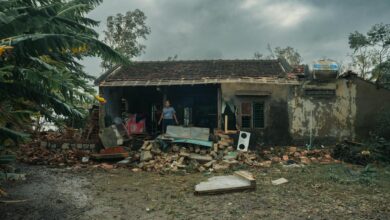
Rising insurance premiums in coastal areas have reached a breaking point, with some homeowners facing annual costs exceeding 20% of their property values. From Florida’s hurricane-battered shores to California’s wildfire zones, entire neighborhoods are watching decades of community life dissolve as families pack up and move inland, unable to afford protection for homes their grandparents built.
The exodus isn’t happening in dramatic waves but through quiet individual decisions – a retired couple selling their beachfront cottage, young families choosing suburbs over seaside dreams, small businesses relocating operations away from storm-prone areas. What emerges is a fundamental reshaping of American coastal living, driven not by rising seas but by rising premiums that have made waterfront life financially impossible for middle-class families.
The Premium Explosion Behind the Migration
Insurance costs in high-risk coastal areas have tripled in some regions over the past five years. Florida homeowners now routinely pay $8,000 to $15,000 annually for hurricane coverage, while California coastal properties face similar burdens due to wildfire risk. These increases far outpace income growth, forcing families to choose between keeping their homes and maintaining financial stability.
The numbers tell a stark story. In Miami-Dade County, average homeowners insurance premiums jumped 40% in 2023 alone. Along California’s coast, residents in fire-prone areas report similar spikes, with some insurers pulling out entirely rather than continue coverage. Louisiana’s coastal parishes have seen even more dramatic increases, with some areas becoming virtually uninsurable at any price.
State-backed insurance programs, designed as safety nets, now carry premiums nearly as high as private coverage. Florida’s Citizens Property Insurance Corporation, the state’s insurer of last resort, covers over one million policies with rates that still strain household budgets. These programs were never intended to be permanent solutions but have become the only option for many coastal residents.
The ripple effects extend beyond individual families. Local banks report increasing difficulty with mortgage approvals in high-premium areas, as insurance costs push debt-to-income ratios beyond acceptable limits. Real estate agents describe a two-tier market where cash buyers dominate, while families dependent on financing find themselves priced out of coastal communities they’ve called home for generations.
Communities Disappearing One Family at a Time
The relocation pattern follows predictable routes inland. Florida families move from coastal counties to central regions like Polk and Lake counties, where insurance costs drop dramatically. California residents migrate from Marin and Sonoma counties toward the Central Valley, trading ocean views for affordable coverage. These moves create ghost neighborhoods along the coast while straining infrastructure in receiving communities.
Small businesses face particularly difficult choices. A restaurant owner in the Outer Banks might pay $25,000 annually to insure a modest building, money that could employ additional staff or upgrade equipment. Many choose relocation over closure, taking their tax base and employment opportunities to inland towns hungry for economic development.
The social fabric of coastal communities unravels gradually. School enrollments decline as families with children leave first, seeking stable housing costs. Churches lose congregations. Volunteer fire departments struggle to maintain staffing as members move away. The cultural continuity that makes communities more than just collections of houses begins to fray.

Local governments watch tax bases erode as property values stagnate or decline in areas where insurance costs consume significant portions of household income. Municipal budgets strain to maintain infrastructure for shrinking populations, creating a feedback loop where reduced services further discourage residents from staying.
Some communities attempt intervention. North Carolina’s Outer Banks explored creating local insurance pools, while several Florida municipalities lobby for state legislation capping premium increases. However, these efforts often conflict with insurance industry financial realities, creating tension between community preservation and actuarial mathematics.
The Inland Boom and Its Challenges
Receiving communities face their own pressures as coastal refugees arrive. Towns in central Florida that once grew slowly now struggle with rapid population increases. Housing costs rise in previously affordable areas as demand spikes from relocating families with equity from coastal property sales.
Infrastructure built for gradual growth strains under sudden population increases. Schools face overcrowding, healthcare systems see longer wait times, and traffic patterns shift as former coastal residents commute back for work. The changes in regional banking patterns reflect these population shifts, with institutions expanding into newly popular inland markets.
Economic benefits accompany the challenges. Restaurants, retail stores, and service businesses in receiving areas report increased customer bases. Construction companies boom as new residents renovate older inland properties or build new homes. Local banks see deposit growth from customers bringing accumulated wealth from coastal property sales.
The demographic makeup of inland communities changes as well. Retirees who once concentrated in coastal areas now spread throughout inland regions, bringing different political priorities and community involvement patterns. School systems adjust to serve families relocating for affordability rather than lifestyle preferences.
Cultural integration varies by location. Some inland communities embrace new residents and their resources, while others resist changes to established patterns of life. The success of these transitions often determines whether relocated families stay permanently or continue moving in search of communities that welcome their participation.
Insurance Industry Response and Market Evolution
Insurance companies defend premium increases as necessary responses to increased claims costs and climate-related risks. Hurricane damage payouts have grown exponentially, with single storms now generating billions in claims. Wildfire seasons extend longer and burn more intensively, creating unpredictable but massive liability exposures.
The industry increasingly uses sophisticated modeling to price risk, leading to dramatic premium variations even within the same neighborhoods. Houses on slightly higher ground or with newer construction materials might pay significantly less than identical properties just blocks away. This precision pricing accelerates community fragmentation as some residents can afford to stay while neighbors cannot.

New insurance models emerge to serve the changing market. Some companies offer reduced coverage options, insuring only up to specific dollar amounts rather than full replacement costs. Others focus exclusively on newly constructed homes built to latest storm-resistance standards, leaving owners of older properties with fewer options.
Technology plays an increasing role in risk assessment and premium calculation. Satellite imagery, weather modeling, and property condition databases allow insurers to price policies with unprecedented precision. While this improves industry profitability, it also creates sharp distinctions between insurable and uninsurable properties, accelerating the sorting of communities by economic capability.
The future of coastal insurance markets remains uncertain. Some experts predict continued premium increases will make coastal living a luxury available only to the wealthy, fundamentally changing the character of American seaside communities. Others anticipate government intervention or new insurance models that might stabilize costs enough to preserve middle-class coastal access.
The great coastal migration driven by insurance costs represents more than individual financial decisions. It reflects a broader reckoning with climate risk, community sustainability, and the true cost of living in America’s most desirable but vulnerable places. As families continue choosing financial security over geographic preference, the map of American settlement patterns quietly but dramatically reshapes itself, one relocated household at a time.
Frequently Asked Questions
Why are coastal insurance premiums increasing so dramatically?
Hurricane and wildfire damage claims have grown exponentially, with single storms generating billions in payouts, forcing insurers to raise premiums to cover increased risks.
Which areas are most affected by rising coastal insurance costs?
Florida’s hurricane zones, California’s wildfire-prone coastal areas, and Louisiana’s coastal parishes face the highest premium increases, with some areas becoming virtually uninsurable.